The Friday Morning Update That Took Down 8.5 Million Computers: The Anatomy of CrowdStrike's Channel File 291
How an out-of-bounds memory read in Windows Ring 0 bypassed automated validation, bricked global airlines, and cost Fortune 500 enterprises $5.4 billion.
Verified through official records, public filings, primary post-mortems, or corroborated journalism. Zero invented facts.
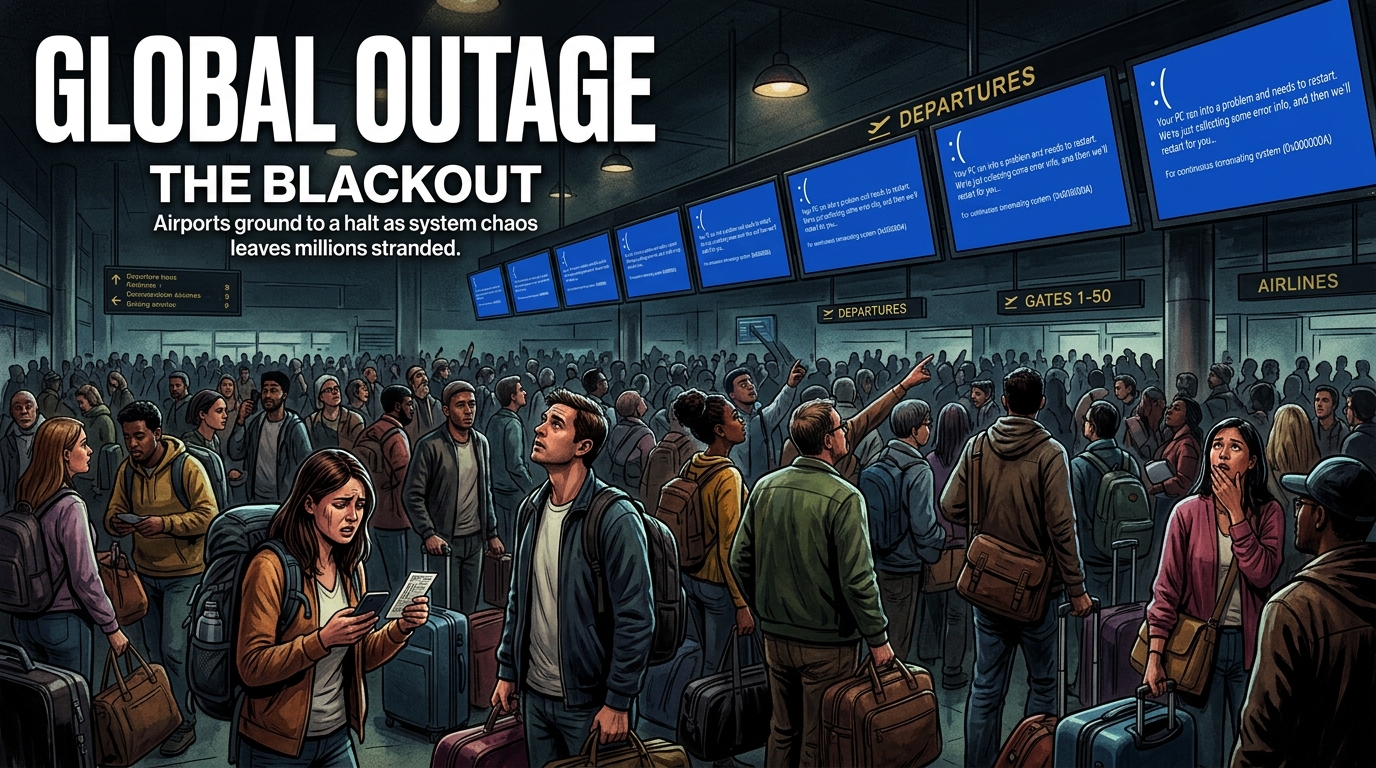
At 04:09 UTC on July 19, 2024, a 40KB configuration file was pushed to 8.5 million Windows machines. Within minutes, the global economy froze. Here is the forensic systems post-mortem.
At 04:09 UTC on Friday, July 19, 2024, a 40-kilobyte configuration file was pushed across the internet to Windows machines worldwide.
Within ninety minutes, 8.5 million computers crashed simultaneously into unbootable blue-screen recovery loops (BSOD: PAGE_FAULT_IN_NONPAGED_AREA).
Airlines grounded over 5,000 commercial flights, emergency 911 dispatch centers in multiple US states reverted to handwritten index cards, and surgical teams across European hospitals were forced to cancel non-emergency operations as patient electronic medical records vanished into kernel panic faults.
The global outage inflicted an estimated $5.4 billion in direct enterprise losses—the largest information technology disaster in human history.
And it was triggered not by an adversarial nation-state cyberattack, but by cybersecurity software engineered specifically to defend against one.
What the evidence establishes:
- The technical failure mechanisms and financial consequences as documented in primary regulatory and court records.
What the evidence does NOT establish:
- Any individual operator’s personal malice or deliberate sabotage.
- Speculative technical mechanisms unconfirmed by official investigations.
The Forensic Discrepancy Matrix
The gap between CrowdStrike’s internal quality assurance assumptions, what the configuration update actually contained, and how the Windows kernel executed the code illustrates an absolute failure of staged deployment controls:
| System Parameter | Software Architect Expectation | Delivered Channel File 291 Reality | Windows Kernel Reaction | Systemic Impact |
|---|---|---|---|---|
| Parser Input Fields | 20 Validated IPC Parameters | 21 Parameter Input Fields | Index 21 exceeded struct bounds | Out-of-Bounds Memory Read |
| Execution Privilege | Ring 0 Kernel (csagent.sys) |
Untested Config Payload | Zero Process Isolation in Kernel | Immediate BugCheck 0x50 Halt |
| Deployment Gate | Staged Canary Ring Rollout | Global Simultaneous Broadcast | 8.5M Endpoints Updated in 1 Wave | Simultaneous Global Monoculture Failure |
| Recovery Path | Remote Patch Rollback | Blue Screen Loop (No Network Stack) | Required Manual Physical BitLocker Key Entry | Days of Physical Admin Recovery |
Because CrowdStrike classified Channel File 291 as a dynamic “Content Configuration” rather than executable binary code, the file bypassed standard kernel-driver code-signing checks, bypassed Microsoft Windows Hardware Quality Labs (WHQL) verification, and bypassed staged canary rings.
Act I: The Illusion of the Sacred Ring
To understand how a 40KB file brought down airlines and hospitals, you have to examine the hierarchical privilege model of modern operating systems.
Operating systems are divided into hierarchical privilege rings:
- Ring 3 (User Mode): Web browsers, word processors, and business applications. If an application in Ring 3 encounters an unhandled exception or memory leak, the operating system kernel simply terminates the process. The computer keeps running.
- Ring 0 (Kernel Mode): The core of the operating system. The kernel controls direct hardware access, memory page tables, and CPU interrupt vectors. Nothing in Ring 0 is permitted to crash. If kernel code attempts to read an invalid memory address, Windows executes a mandatory
BugCheck(Blue Screen of Death) and halts the CPU immediately to prevent physical disk corruption.
Because modern malware attempts to conceal itself deep within kernel structures, endpoint detection and response (EDR) agents like CrowdStrike Falcon run as Ring 0 kernel drivers (csagent.sys). They inspect memory blocks, system calls, and network packets before Windows itself is permitted to execute them.
For years, this architecture was sold to Fortune 500 enterprises as impenetrable enterprise defense. In reality, it created an unauthenticated single point of catastrophic global failure.
Act II: The 04:09 UTC Disaster (Incident Telemetry Log)
At 04:09 UTC, CrowdStrike’s automated cloud backend pushed an updated configuration packet—Channel File 291—designed to detect malicious Named Pipes used by threat actors:
┌──────────────────────────────────────────────────────────────────────────────────────────┐
│                     CROWDSTRIKE CHANNEL FILE 291 TELEMETRY LOG (UTC)                     │
├──────────────┬────────────────────────┬────────────────────────────────┬─────────────────┤
│ Timestamp    │ Originating System     │ Event / System Action          │ Global Impact   │
├──────────────┼────────────────────────┼────────────────────────────────┼─────────────────┤
│ 04:09:00 UTC │ CrowdStrike Cloud CDN  │ Channel File 291 Deployed      │ Broadcast Worldwide │
│ 04:11:32 UTC │ Windows Kernel Agent   │ `csagent.sys` Reads Field #21  │ Pointer Address 0x9c │
│ 04:12:05 UTC │ Windows Memory Manager │ Memory Address Out-of-Bounds   │ BugCheck 0x50 BSOD │
│ 04:30:00 UTC │ Global Airlines / Banks│ 5,000+ Flights Grounded        │ Travel Gridlock │
│ 05:27:00 UTC │ CrowdStrike Cloud Ops  │ Channel File 291 Reverted      │ Live Push Halted│
│ 06:15:00 UTC │ Enterprise IT Desks    │ Machines Locked in BitLocker   │ Manual Reboot Required │
└──────────────┴────────────────────────┴────────────────────────────────┴─────────────────┘
The fatal flaw was documented in the CrowdStrike Official Root Cause Analysis:
- In February 2024, CrowdStrike introduced a new IPC Template Type designed to accept 21 input fields.
- However, the Content Validator tool on CrowdStrike’s build servers was configured to validate instances against a schema that only anticipated 20 fields.
- When Channel File 291 passed through automated validation, the tool validated the first 20 fields and ignored the 21st.
- When
csagent.sysexecuted on 8.5 million live Windows machines, the driver attempted to read the 21st parameter from memory offset0x9c. The pointer pointed to invalid unpaged memory.
The Windows memory manager triggered PAGE_FAULT_IN_NONPAGED_AREA, instantly terminating the OS.
Primary Judicial & Regulatory Exhibits: Official RCA & Delta Litigation
The post-incident regulatory audits and ongoing federal litigation established that CrowdStrike operated with glaring gaps in its deployment safeguards:
🏛️ JUDICIAL RECORD EXHIBIT (Delta Air Lines v. CrowdStrike, Fulton County Superior Court)
“CrowdStrike failed to perform basic quality assurance, testing, or staged rollout before deploying Channel File 291 to millions of mission-critical computers worldwide.
By bypassing standard canary deployment rings and forcing an untested kernel-level configuration update simultaneously across the entire global ecosystem, CrowdStrike demonstrated gross operational negligence, causing over $500 million in direct cancellation losses and grounding hundreds of thousands of passengers.“
— Plaintiff Complaint, Delta Air Lines, Inc.
And from CrowdStrike’s own Official Root Cause Analysis:
“The Content Validator had a defect that allowed Channel File 291 to pass validation despite containing 21 input fields when the sensor’s Content Interpreter expected 20. The resulting out-of-bounds memory read in the kernel driver caused an unhandled page fault exception.”
— CrowdStrike Official Root Cause Analysis (August 6, 2024)
Act III: The BitLocker Recovery Nightmare
The cruelty of the outage was its recovery mechanics.
Because the crash occurred inside Ring 0 during early boot execution, the computers could not boot far enough to load their network interface cards. They could not receive CrowdStrike’s emergency fix (05:27 UTC).
To fix each machine:
- A human IT administrator had to physically walk to the machine.
- Boot the PC into Windows Safe Mode.
- Retrieve the machine’s 48-character BitLocker Drive Encryption Key from corporate identity servers.
- Manually navigate to
C:\Windows\System32\drivers\CrowdStrike\and physically delete the corruptedC-00000291*.sysfile.
For global airlines with 40,000 distributed check-in kiosks and gate terminals scattered across 300 international airports, manual recovery took over seven agonizing days.
┌──────────────────────────────────────────────────────────────────────────────────────────┐
│                             THE GLOBAL FINANCIAL & OPERATIONAL FALLOUT                   │
├────────────────────────────────────────────────────────┬─────────────────────────────────┤
│ Total Impacted Windows Endpoints                       │ 8,500,000 Machines              │
│ Total Commercial Airline Flights Cancelled Worldwide   │ 5,000+ Flights                  │
│ Estimated Direct Losses Across Fortune 500             │ $5,400,000,000 USD              │
│ Market Value Wiped from CrowdStrike Equity (CRWD)      │ ~$25,000,000,000 (35% Plunge)   │
├────────────────────────────────────────────────────────┼─────────────────────────────────┤
│ Congressional Sanction                                 │ House Homeland Security Subpoena│
│ Microsoft Architectural Overhaul                       │ Initiative to remove 3rd party kernel drivers │
└────────────────────────────────────────────────────────┴─────────────────────────────────┘
The US House Homeland Security Committee subpoenaed CrowdStrike leadership, and Microsoft announced an initiative to redesign Windows security away from third-party kernel drivers.
🛡️ Systems Prevention Playbook (How to Build Systems That Survive Human Reality)
If your enterprise deployment pipeline allows a single engineer or automated job to push code simultaneously to 100% of global production nodes, your architecture is built on catastrophic optimism.
Here is how modern infrastructure and cybersecurity teams build software that survives human errors:
1. The Friction Rule: Mandatory Progressive Deployment Rings
Never allow any update—binary or configuration—to bypass staged canary deployments:
- Ring 0 (Internal Testing): Deploy to 1% of internal nodes; soak for 6 hours.
- Ring 1 (Canary Tier): Deploy to 5% of external customer nodes; monitor error rates for 12 hours.
- Ring 2 (Broad Rollout): Deploy across the remaining fleet in 25% tranches with automated rollback triggers if BSOD rates exceed 0.001%.
2. The Physical Boundary Constraint: Defensive Kernel Architecture
Security tools must never assume configuration files are safe:
- Strict Bounds Checking: Every pointer read inside kernel space must execute explicit bounds checks (
if (field_index >= MAX_FIELDS) return ERROR_INVALID_STRUCT). - Eliminate Raw Kernel Dependencies: Transition endpoint detection agents from Ring 0 kernel drivers to eBPF (Extended Berkeley Packet Filter) and Microsoft User-Mode Security APIs, ensuring that an agent crash terminates the daemon without bricking the operating system.
3. The Emergency Brake: Independent Boot Health & Out-of-Band Recovery
Operating systems must be able to heal themselves from unbootable updates:
- Implement automated kernel watchdog timers that count sequential boot crashes: if Windows crashes three times during boot, automatically revert the last-modified channel configuration files to the previous stable snapshot without requiring physical BitLocker admin intervention.
The Archivist’s Verdict
The Archivist’s Assessment:
- What looked like the mistake: A software bug in CrowdStrike’s Content Validator that allowed a 21-field configuration file to pass into a 20-field kernel parser.
- What actually failed: A global IT monoculture that granted third-party security vendors unchecked Ring 0 kernel access, coupled with a deployment pipeline that bypassed canary rollout rings and pushed untested code simultaneously to 8.5 million machines.
- Why reasonable people allowed it to happen: Enterprise IT teams outsourced existential risk to a single cybersecurity vendor in the name of centralized compliance, while CrowdStrike treated dynamic configuration updates as harmless data that did not require the rigorous testing applied to binary code.
- The point of no return: 04:09 UTC on July 19, 2024, when CrowdStrike’s CDN broadcast Channel File 291 globally without staged ring gates, turning millions of computers into unbootable blue screens in under ninety minutes.
- Who ultimately carried responsibility: While CrowdStrike absorbed historic market capitalization losses and faces multi-billion-dollar corporate litigation, the broader failure rests with an enterprise architecture paradigm that allowed the entire global economy to depend on a single, unisolated kernel driver.
- The uncomfortable lesson: Armor that cannot bend will shatter. When you grant software absolute power over the kernel to protect against external adversaries, you make that software the single most dangerous weapon in your infrastructure.
Primary Sources & Official Filings
- CrowdStrike Official Technical Root Cause Analysis (RCA) — Vendor Comprehensive Post-Mortem on Channel File 291.
- Microsoft Security Blog Incident Post-Mortem — Microsoft Windows Kernel Failure Breakdown.
- US House Homeland Security Committee Hearing Records — Congressional Investigation & Testimony.
- Delta Air Lines v. CrowdStrike Court Records — Fulton County Superior Court Commercial Damages Docket.
What Was CrowdStrike Falcon?
CrowdStrike Falcon is an enterprise endpoint detection and response (EDR) platform deployed on over 29,000 customers globally, including airlines, hospitals, financial institutions, and government agencies. Falcon operates as a Ring 0 Windows kernel driver (csagent.sys), granting it unrestricted access to CPU memory, hardware registers, and OS system calls — the deepest possible execution privilege. This kernel-level position allows Falcon to detect sophisticated malware that conceals itself within operating system structures, but it also means that a defect in Falcon’s code or configuration can immediately crash the entire host machine without process isolation or recovery options.
Then vs Now: Engineering Evolution After the CrowdStrike Outage
| 2024 Failure Pattern | Modern Defensive Standard |
|---|---|
| Global simultaneous config push with no canary ring gates | Mandatory progressive deployment rings: 1% → 5% → 25% → 100% with 12-hour observability windows between tranches |
| Content Validator accepted 21 fields against a 20-field schema | Schema-versioned validation where the parser’s field count is read from the file header itself, not hardcoded in the validator |
| Ring 0 kernel driver with no process isolation | eBPF (Extended Berkeley Packet Filter) or Microsoft ELAM user-mode hooks that contain crashes within a daemon process rather than the kernel |
| No automated recovery from unbootable boot loops | OS-level watchdog counters: three consecutive boot failures trigger automatic rollback of the last-modified driver or configuration file |
| BitLocker key required physical administrator presence | Enterprise pre-provisioned recovery partitions storing the previous stable channel file snapshot, accessible without network connectivity |
FAQ: CrowdStrike Outage Explained
What caused the CrowdStrike outage on July 19, 2024?
Channel File 291 delivered 21 input fields to a kernel parser expecting 20. The unhandled out-of-bounds memory read in csagent.sys triggered a PAGE_FAULT_IN_NONPAGED_AREA BugCheck, instantly crashing every updated Windows machine.
Why did 8.5 million computers fail simultaneously?
CrowdStrike bypassed staged canary rings and broadcast Channel File 291 globally in a single wave — a deployment monoculture with no staged rollback capability.
How do you fix the CrowdStrike BSOD?
Boot into Windows Safe Mode, enter the machine’s 48-character BitLocker key, navigate to C:\Windows\System32\drivers\CrowdStrike\, and delete the corrupted C-00000291*.sys file. The fix requires physical administrator presence because the network stack cannot load during the crash loop.
Was the CrowdStrike outage a cyberattack?
No. CrowdStrike’s own Official Root Cause Analysis confirmed the outage was caused by a software defect in the internal content validation tool — not adversarial exploitation.
How much did the outage cost?
$5.4 billion in direct enterprise losses. CrowdStrike’s stock dropped approximately 35% ($25 billion in market cap). Delta Air Lines filed a civil lawsuit seeking over $500 million in cancellation damages.
What regulatory action followed?
The US House Homeland Security Committee subpoenaed CrowdStrike executives. Microsoft announced a Windows security redesign to reduce third-party Ring 0 kernel driver dependencies.
What is Channel File 291?
A dynamic configuration file defining Named Pipe threat detection logic. CrowdStrike classified it as “content configuration” (not executable code), allowing it to skip WHQL kernel driver verification and staged deployment checks — the misclassification that enabled the disaster.
Could this happen again today?
CrowdStrike’s post-incident remediation introduced a new Rapid Response Content Deployment System with explicit field-count validation, staged ring gates, and automated error rate monitors. Microsoft’s eBPF kernel security initiative — if broadly adopted — would eliminate the architectural dependency that made the outage possible in the first place.
The Evidence Ledger & Source Audit
ErrorLedger Epistemic Standard & Public ReceiptsCrowdStrike Official Root Cause Analysis (RCA), Microsoft Incident Review, and US House Homeland Security Committee Hearings